

Ekphrasis: Art in poetry
Editor’s note: Some of the greatest poems of all time revolve around works of art: paintings, monuments, installations. They bring these static creations to life through word and description. This concept, originating in ancient Greece, is called “ekphrasis”. Here, Mekhala Singhal shines a light on poems that draw inspiration from famous paintings—by the likes of Van Gogh, Tyeb Mehta, and others—creating new worlds for us, the readers, to inhabit.
Written by: Mekhala Singhal
*****
Sasha Pimentel wrote, “I claw onto you / as the only tree here, your / swing. I’m mad for gravity though / I’m bound, diagonally, to / you. Let me.” She was describing Gustav Klimt’s stunning painting, ‘The Kiss’.
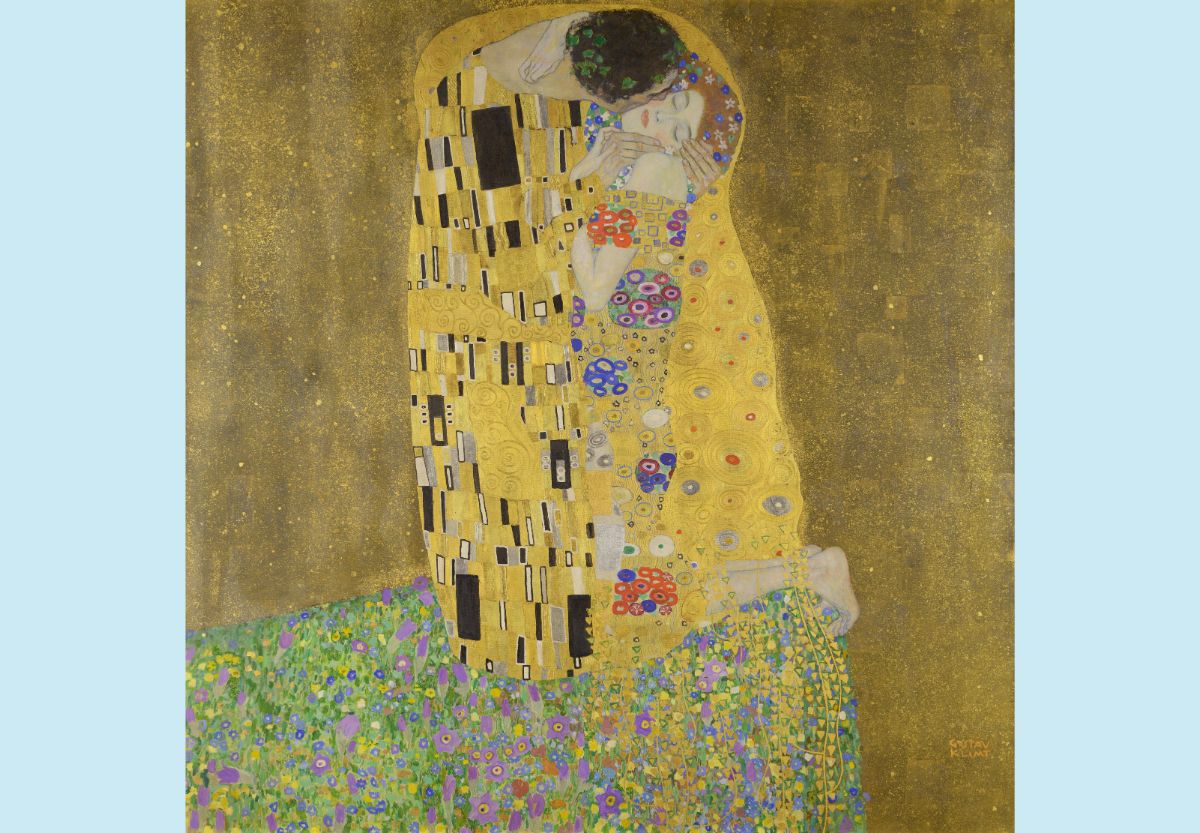
This is ekphrasis, a literary device used to refer to a work of art in prose and poetry.
One of the most famous examples of ekphrastic writing can be found in Homer’s 'Iliad', where the shield of Achilles is described: “Thus the broad shield complete the artist crown’d / With his last hand, and pour’d the ocean round: / In living silver seem’d the waves to roll, / And beat the buckler’s verge, and bound the whole.”
There are moments that art moves us—to smiles, tears, thought, rumination—but we perhaps lack the language to explain how we feel. Poets do this job for us when we can’t—they offer us a way to look at beauty and a way to reach it without physical contact.
Here are 9 ekphrastic poems that reference great works of art.
*****
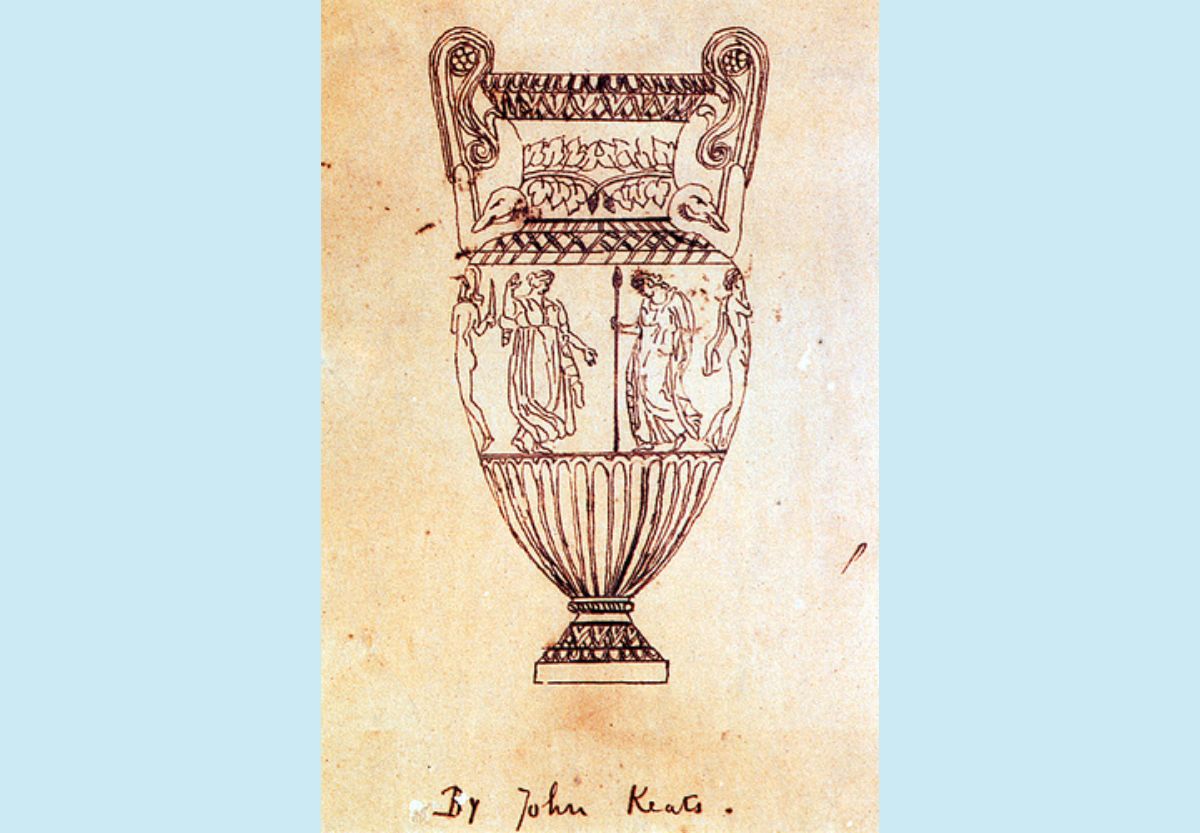
'Ode on a Grecian Urn' by John Keats
John Keats is one of the world’s best-known English poets, despite a canon of only 54 published pieces of poetry. Keats’s poem ‘Ode on a Grecian Urn’, first published in 1819, is an early (ish) example of ekphrasis.
What men or gods are these? What maidens loth?
What mad pursuit? What struggle to escape?
What pipes and timbrels? What wild ecstasy?
Is it not a common enquiry, upon seeing art from Ancient Greece, to wonder who these warriors and soldiers may have been? To wonder, bitterly even, who the women pursued by these men may have been.
Who are these coming to the sacrifice?
To what green altar, O mysterious priest,
Lead'st thou that heifer lowing at the skies,
And all her silken flanks with garlands drest?
What little town by river or sea shore,
Or mountain-built with peaceful citadel,
Is emptied of this folk, this pious morn?
Keats refers to an animal sacrifice, commonly depicted on Grecian urns. He sees a cow, with garlands draped, prepped for its walk to the gallows, being followed and led by the priest and townsmen. In this picture, the world is frozen still, the town empty for all its residents are headed to the sacrifice. Not only does Keats talk of the scene in the painting itself, but of the world created by the artist, and its static existence.
'On the Medusa of Leonardo Da Vinci in the Florentine Gallery' by Percy Bysshe Shelley
The same year that Keats published ‘Ode on a Grecian Urn’, Percy Bysshe Shelley visited the famous Uffizi Gallery in Florence, Italy. There, he saw a painting of Medusa—a Greek monster called a Gorgon—a woman with snakes for hair. A woman who, if looked at, could turn you to stone.
This painting was earlier attributed to Leonarda Da Vinci, thus the name of Shelley’s poem. Now, it is believed to have been created by an unknown 16th century Flemish painter.
Keats described it thus:
And from a stone beside, a poisonous eft
Peeps idly into those Gorgonian eyes;
Whilst in the air a ghastly bat, bereft
Of sense, has flitted with a mad surprise
Out of the cave this hideous light had cleft,
And he comes hastening like a moth that hies
After a taper; and the midnight sky
Flares, a light more dread than obscurity.
'Cézanne’s Ports' by Allen Ginsberg
The avant garde perspectives and subject representation of Paul Cézanne, one of the most influential post-Impressionists of the 19th century (read our essay on Monet and Impressionism) is immortalised in Allen Ginsberg’s Cézanne’s Ports’. Ginsberg, of course, was an important figure of Beat Poetry—a rebellious style that emerged in 1930s and ’40s America, inspired by post-War ideals of liberation and political organisation.
He is perhaps best known for 'Howl', a long-lined poem decrying the destructive society he lived in. But here we focus on ‘Cézanne’s Ports’ (1949), about the scene depicted in Cézanne’s 1883 painting, ‘The Gulf of Marseille Seen from L'Estaque’. He writes of the contrast between the village in the foreground and the vast expanse of water in the back; how the tranquility in the painting highlights how small and insignificant our lives are in comparison to the everlasting steadfastness of nature.
In the foreground we see time and life
swept in a race
toward the left hand side of the picture
where shore meets shore.
But that meeting place
isn't represented;
it doesn't occur on the canvas.
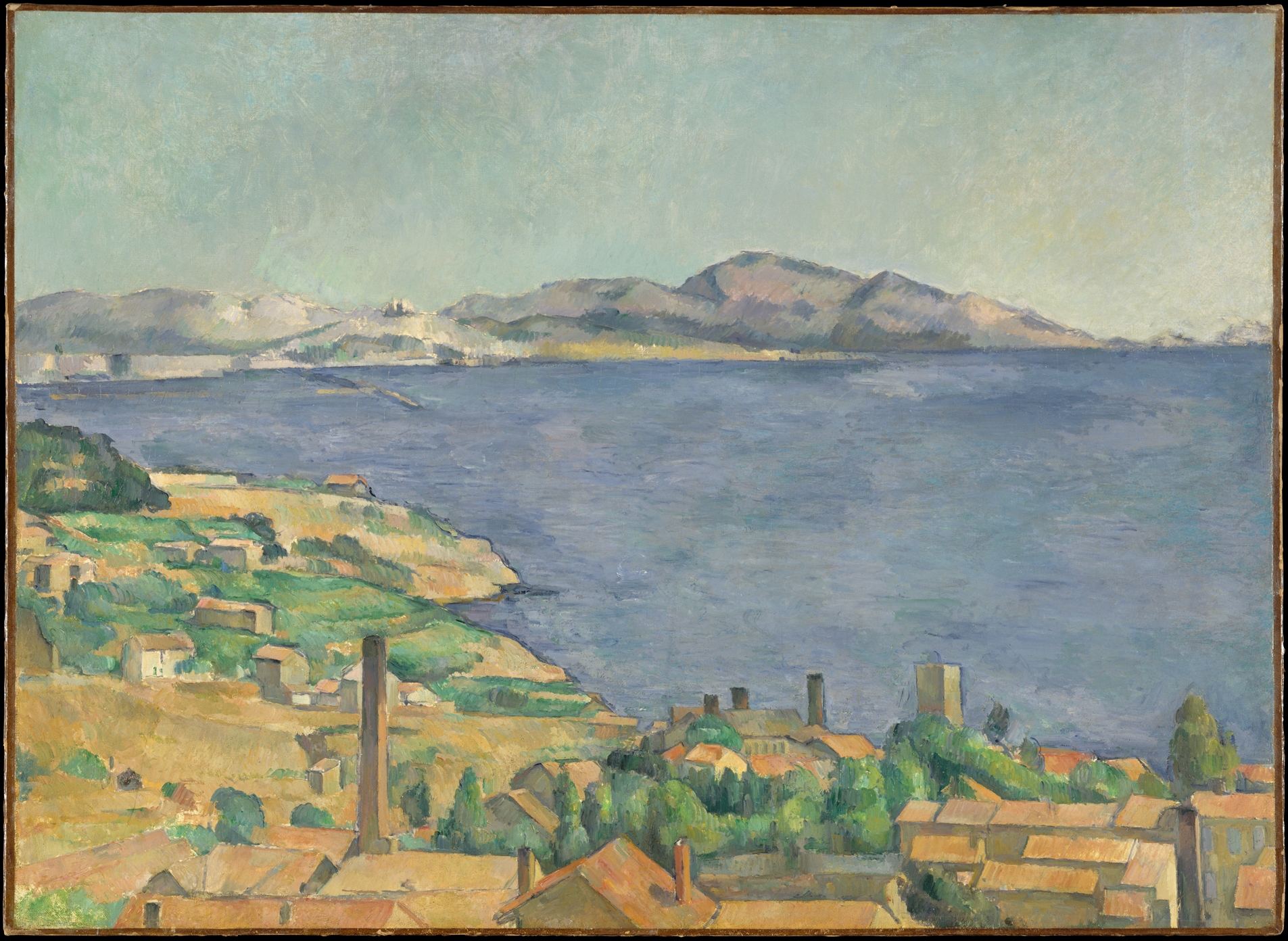
For the other side of the bay
is Heaven and Eternity,
with a bleak white haze over its mountains.
And the immense water of L'Estaque is a go-between
for minute rowboats.
'Landscape with the Fall of Icarus' by William Carlos Williams
Another reference to the Greeks in this poem by William Carlos Williams, American-Puerto Rican poet, essayist, and playwright—the story from Greek mythology of the boy who flew too close to the sun. Icarus, son of Daedalus, a master craftsman.
As the tale goes, father and son were trying to escape prison through wings fashioned by Daedalus, made of feathers attached to leather with beeswax. His instructions: do not fly too close to the sun for it would melt the beeswax, and do not fly too close to the sea for it would soak and weigh down the feathers. But Icarus didn’t listen. He flew too close to the sun, and the heat melted his wings. And he fell to his death.
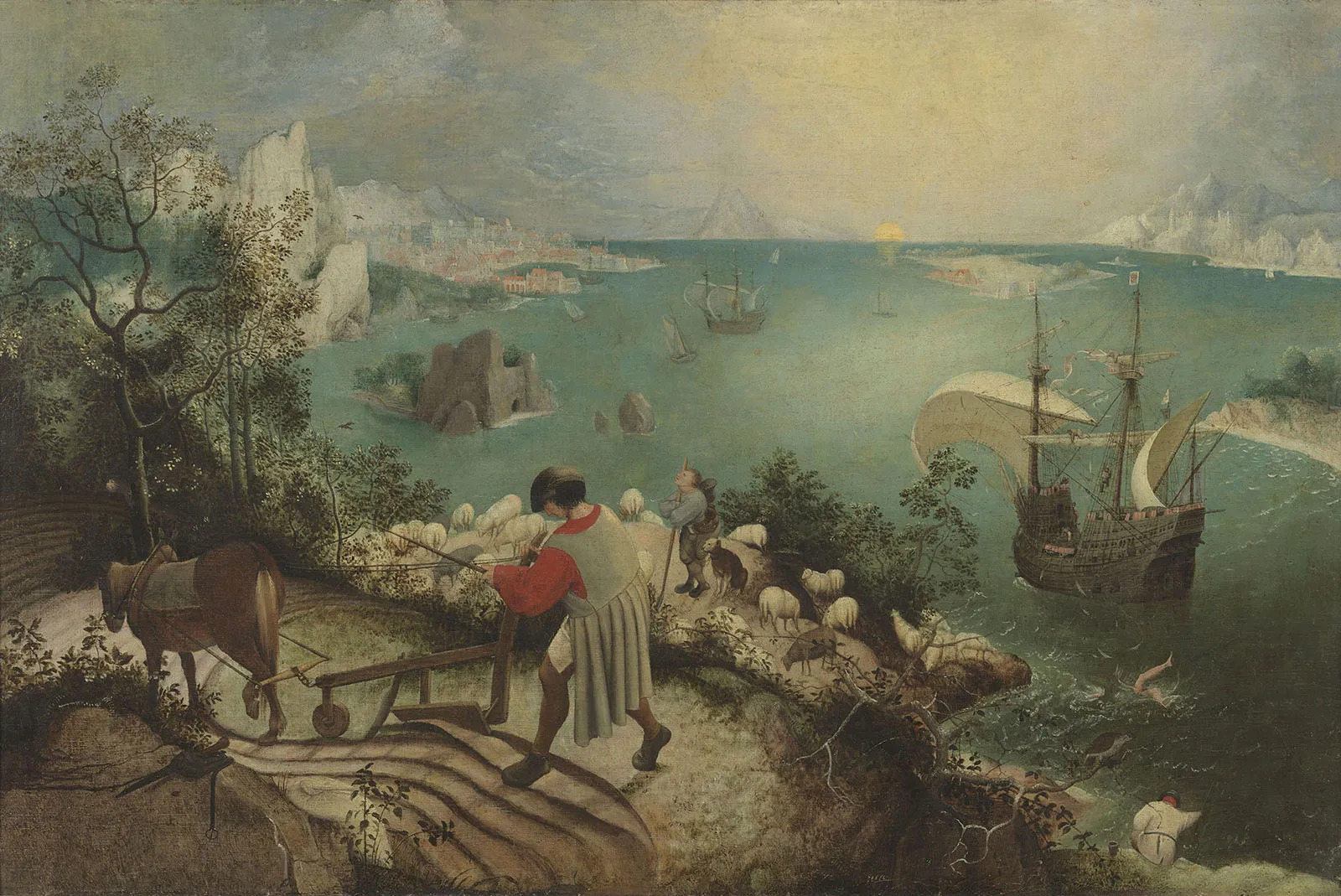
This moment is interpreted in a painting by Pieter Bruegel, the Elder (though this particular one may be a copy, with the original lost). In response to this Bruegel painting, Williams (known to the internet for his widely meme’d “I have eaten/the plums” poem, ‘This Is Just To Say') wrote a poem with the same title.
Williams was an Imagist poet—he wrote of definitive images, avoiding abstraction and elision through text. He’s clear and precise here too. He makes it apparent what Bruegel is trying to tell us—that pride and carelessness can create tragedies in just a moment, as the world carries on. A shepherd daydreams while his sheep roam; the plowman walks on, his horse ahead of him; the ships keep moving. And in the corner, Icarus drowns, his legs sticking up above the water, as the rest of the world continues.
According to Brueghel
when Icarus fell
it was spring
a farmer was ploughing
his field
the whole pageantry
of the year was
awake tingling
near
the edge of the sea
concerned
with itself
He ends the poem with the moment of Icarus’s drowning—short, direct, painful.
unsignificantly
off the coast
there was
a splash quite unnoticed
this was
Icarus drowning
Williams isn’t the only one to write of this painting, however. Over two decades before Williams’s ‘Landscape with the Fall of Icarus’, we had ‘Musée des Beaux Arts’ by WH Auden.
'Musée des Beaux Arts' by WH Auden
WH Auden’s work shows a type of tenacity and versatility that poets today still attempt to emulate. The poet, writer, and playwright was able—through humour, prose—wit and joy, to convey emotions that would otherwise be impossible to explain. In his poem, 'Musée des Beaux Arts', he writes:
About suffering they were never wrong,
The Old Masters: how well they understood
Its human position; how it takes place
While someone else is eating or opening a window or just walking dully along
How, when the aged are reverently, passionately waiting
For the miraculous birth, there always must be
Children who did not specially want it to happen, skating
On a pond at the edge of the wood:
At the end of the poem, he refers directly to the painting;
In Brueghel's Icarus, for instance: how everything turns away
Quite leisurely from the disaster; the ploughman may
Have heard the splash, the forsaken cry,
But for him it was not an important failure; the sun shone
As it had to on the white legs disappearing into the green
Water; and the expensive delicate ship that must have seen
Something amazing, a boy falling out of the sky,
Had somewhere to get to and sailed calmly on.
‘The Starry Night’ by Anne Sexton
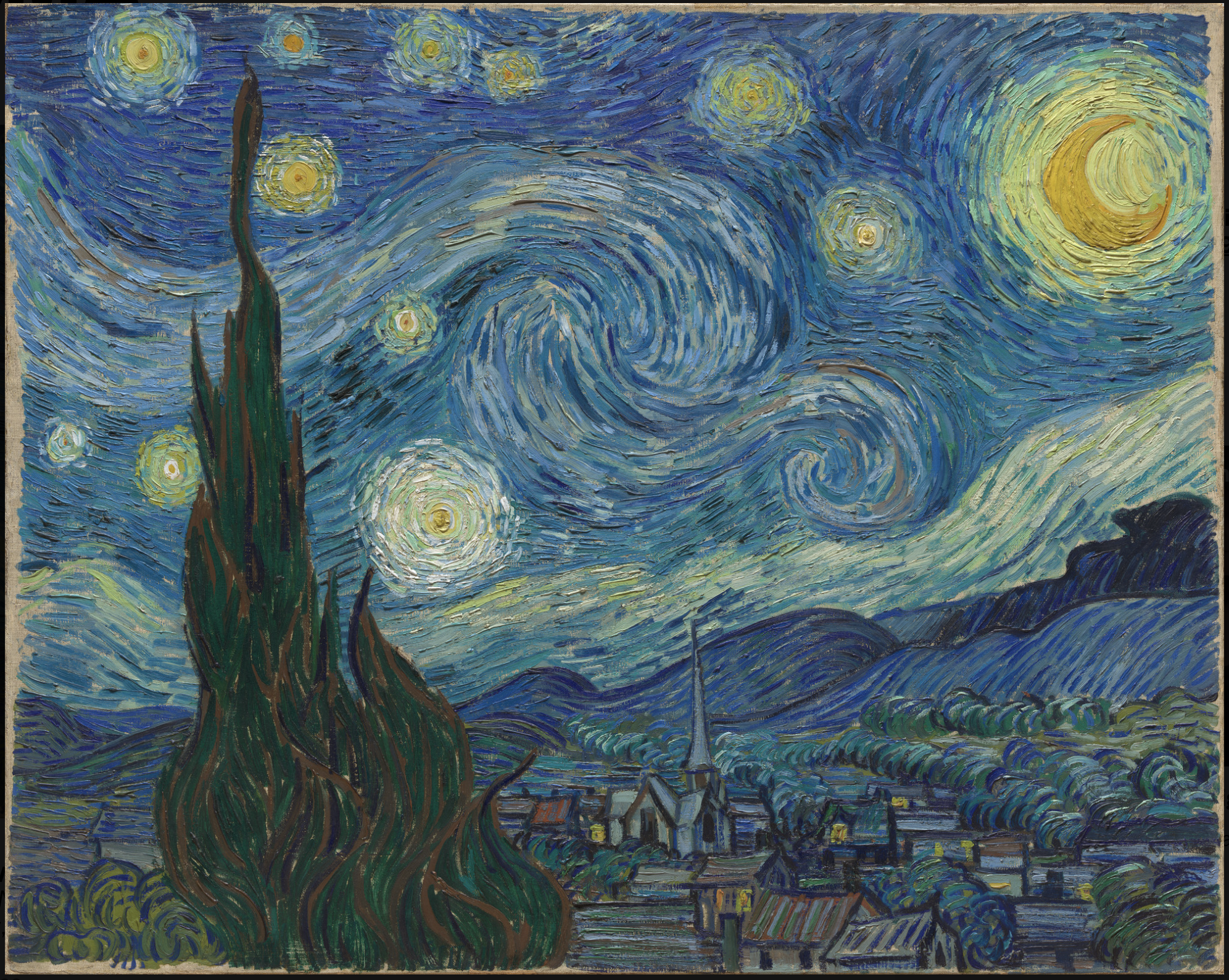
The town does not exist
except where one black-haired tree slips
up like a drowned woman into the hot sky.
The town is silent. The night boils with eleven stars.
Oh starry starry night! This is how
I want to die.
Anne Sexton was known for her emotive, confessional writing. One of the most influential poets of the 20th century, she remains widely read and cited even today. Her work is personal and moving, and overwhelmingly human.
In 1961, she wrote of Vincent Van Gogh’s classic ‘The Starry Night’, a painting that elicits a sense of oneness with the universe, and a feeling of awe and amazement at the beauty of the world.
It moves. They are all alive.
Even the moon bulges in its orange irons
to push children, like a god, from its eye.
The old unseen serpent swallows up the stars.
Oh starry starry night! This is how
I want to die:
into that rushing beast of the night,
sucked up by that great dragon, to split
from my life with no flag,
no belly,
no cry.
‘Edward Hopper’s Office at Night’ by Victoria Chang
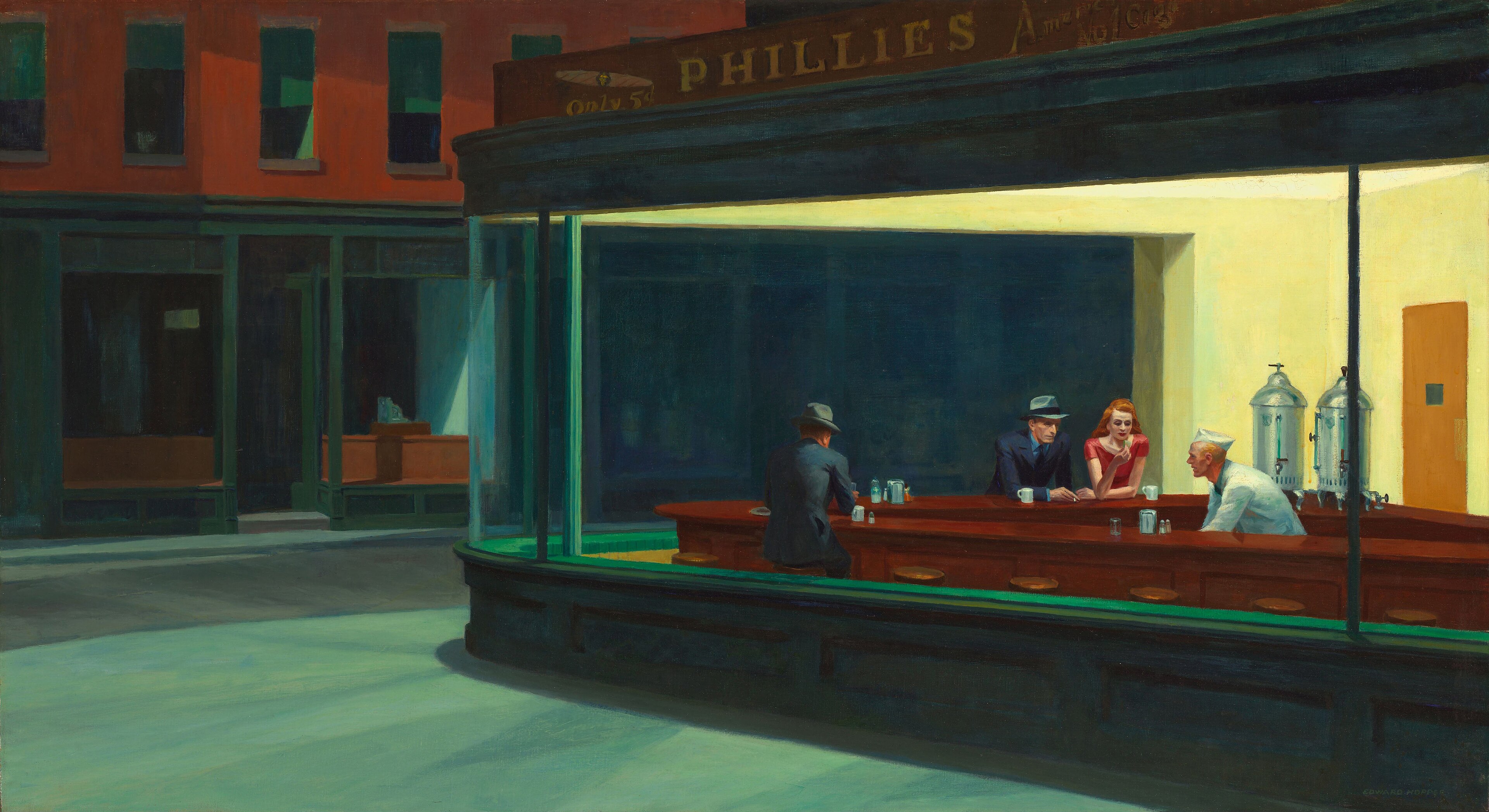
Edward Hopper was an American realist painter whose works remain widely recognisable. His paintings confront themes of loneliness, isolation, confinement, and human connection. Often tender, playing with light and warmth to create a sense of tangibility, his paintings are considered pivotal to American Realism, containing within them a legible narrative and poeticism.
Victoria Chang’s poetry spans ideas of grief, memory, loss, love. It feels as though she herself inhabits the worlds she writes of.
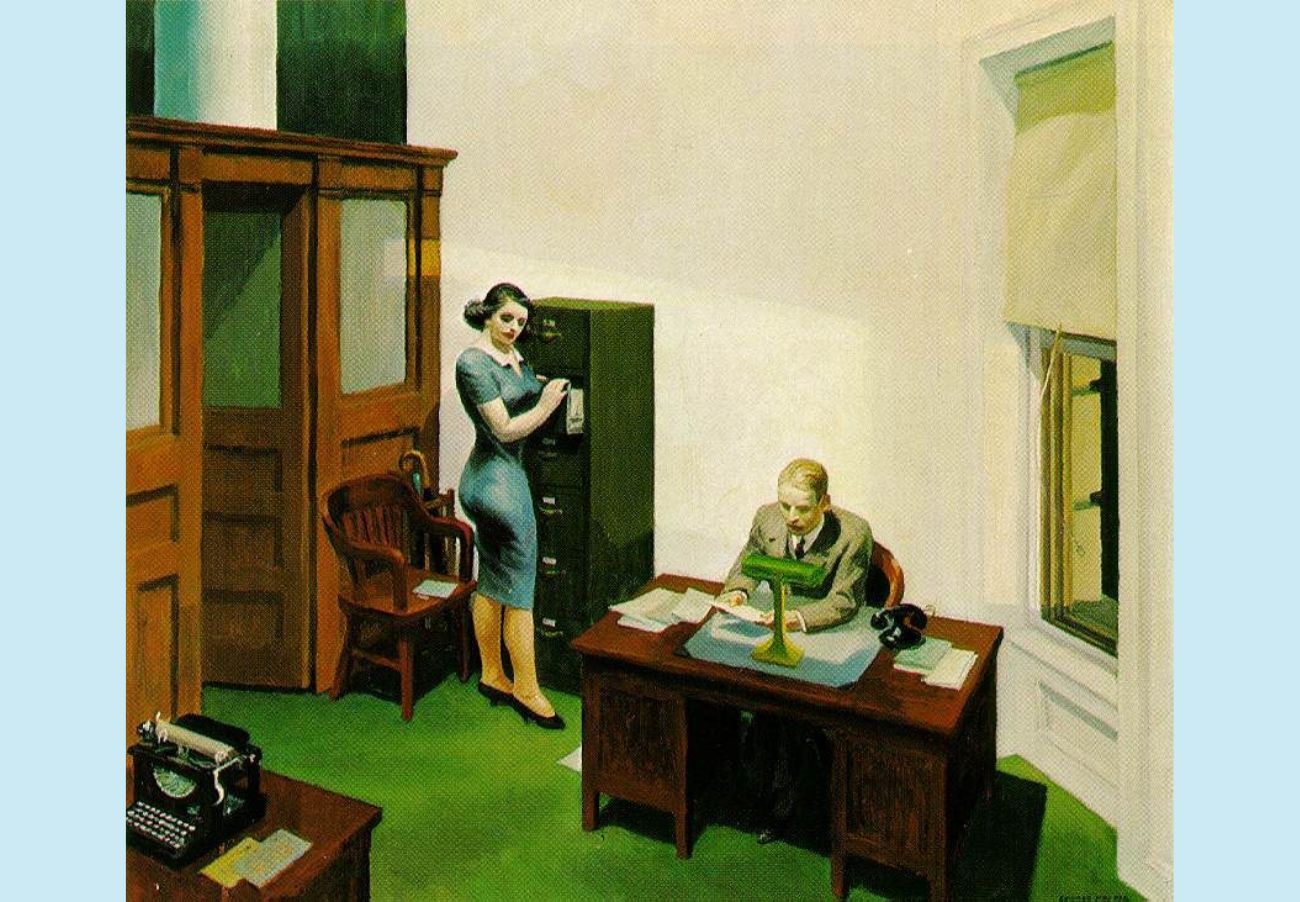
Chang draws from this Hopper painting, ‘Office at Night’, the relationship between the two subjects, and the tensions that may exist both inside and outside of the room. The poem is dynamic, weaving through sentences, and digging at something beneath the surface.
The boss is sitting at the desk the boss doesn’t look
at her the boss is waiting for the black telephone
to ring she also waits for a ring from the boss he is
waiting for the files from her
her blue dress like a reused file folder around
her body her hands tight around the files
the filing cabinet might eat her might take her hand off
the boss might eat her the boss
wants her but the boss wants money more just a little bit
more the boss always seems to want
the money a bit more the boss doesn’t hear
there are taxis outside waiting
for all the women down on the street across the street
a boss prepares for bed another boss above him
in apartment X rotates a Q-tip in his ear before sex
despite instructions on the box we took
my father out of the paper the living will the letters
with their little capes will leave the paper
who will take care of my children later who will take care
of my father the will will take care
of no one a piece of paper cannot take care of anyone I
cannot take care of everyone on some nights
I wake in a panic and can’t tell if I am dead or alive
this year I dye my hair so I won’t have to die
The poem isn’t just about the painting, but starts from where we see it. It creates a world in which the speaker of the poem is as much a character in the story as the two subjects of the painting.
In another poem by Chang about Hopper, ‘Edward Hopper Study: Hotel Room’, she pulls from the painting, 'Hotel Room', a story about the subject—a woman hunched over herself, sat in a hotel room alone.
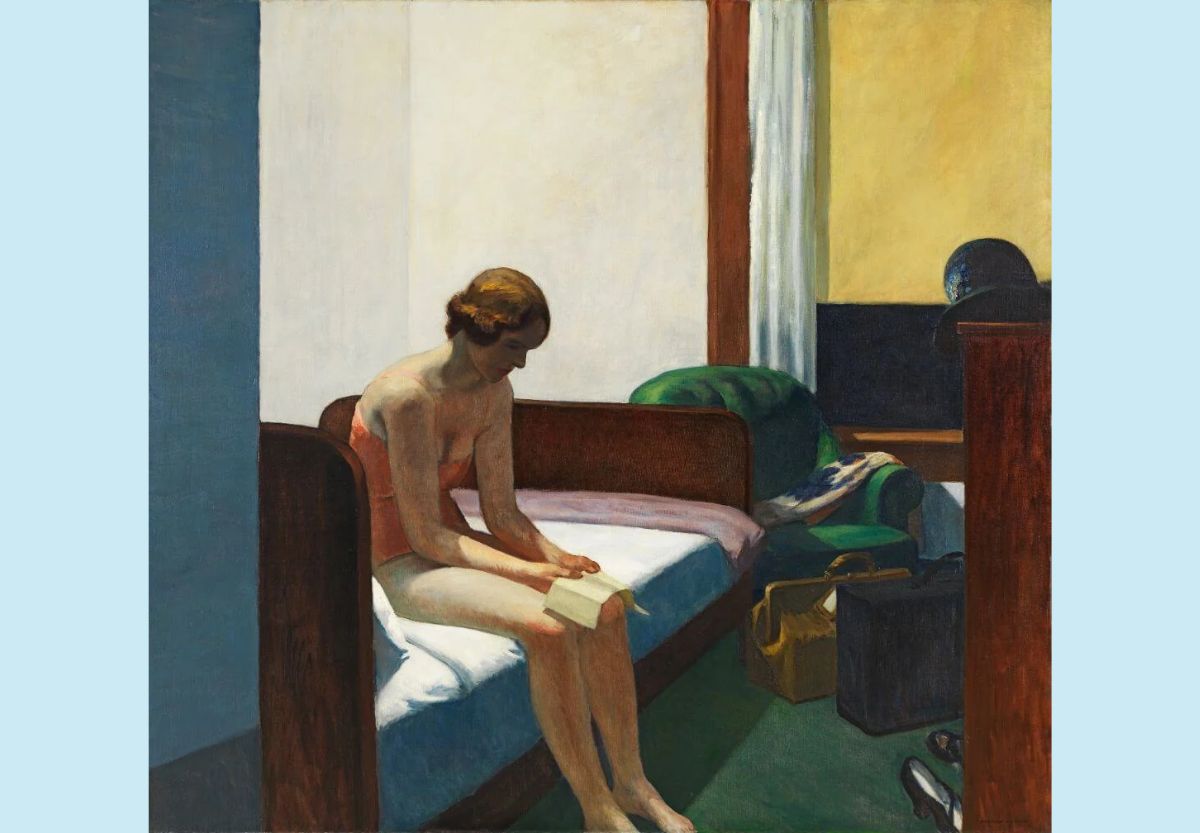
While the man is away
telling his wife
about the red-corseted woman,
the woman waits
on the queen-sized bed.
In telling us about this woman, Chang opens Hopper's paintings to us, the viewer—we see ourselves in her: “That is all / the artist left us with / knowing we would turn / the woman's stone into ours, / a thirst for the self / in everything—even / in the sweet chinks / of mandarin.”
‘Upon Viewing Tyeb Mehta’s Paintings’ by Prabodh Parikh
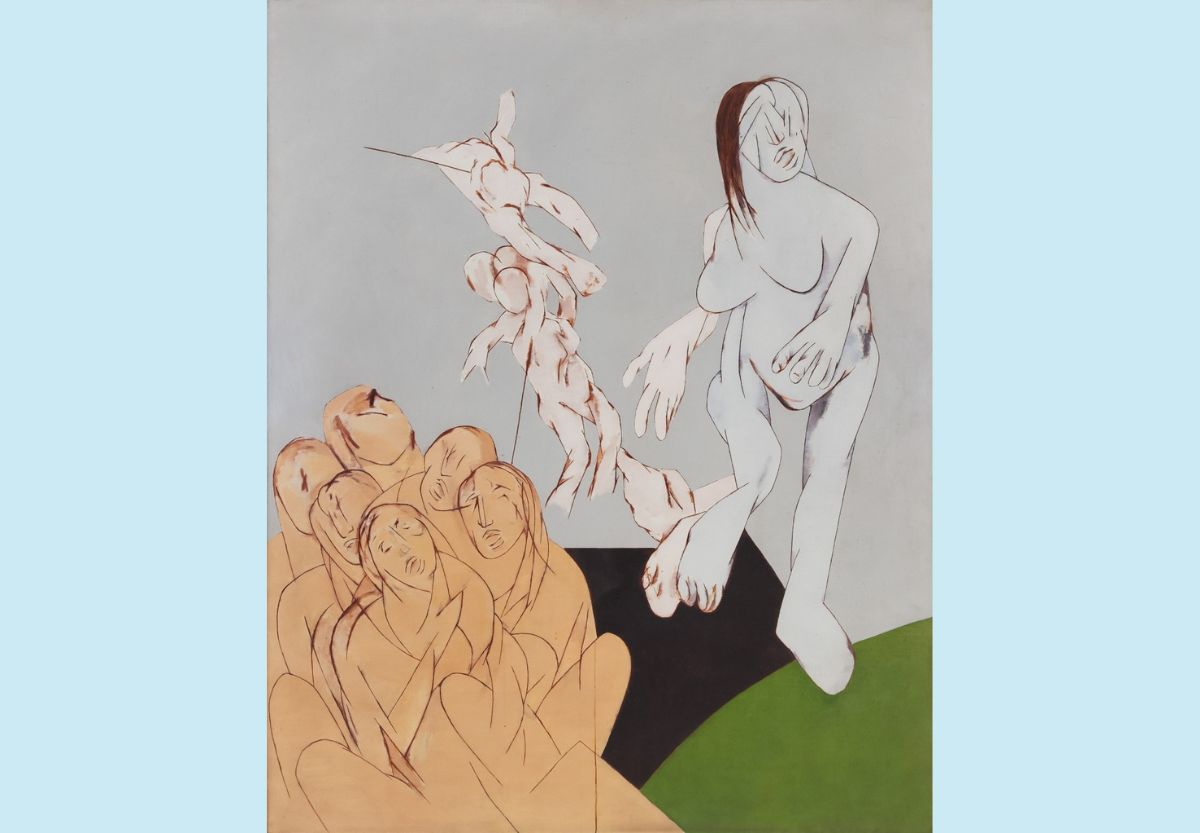
Prabodh Parikh is a Gujarati poet, writer, and professor. His poems, written originally in Gujarati, are inspired by the sensibilities of modernist poets before him, leaning into the metaphorical and surreal. ‘Upon Viewing Tyeb Mehta’s Paintings’, while not technically an ekphrastic poem as it doesn’t specify a singular piece of art, is a beautiful enquiry into Mehta’s style through language. Mehta, considered one of India’s finest Modernists, has a style that evokes a sense of humanness that words cannot always describe. He would often use abstracted or distorted figures in his paintings, creating a specificity and unique visual language.
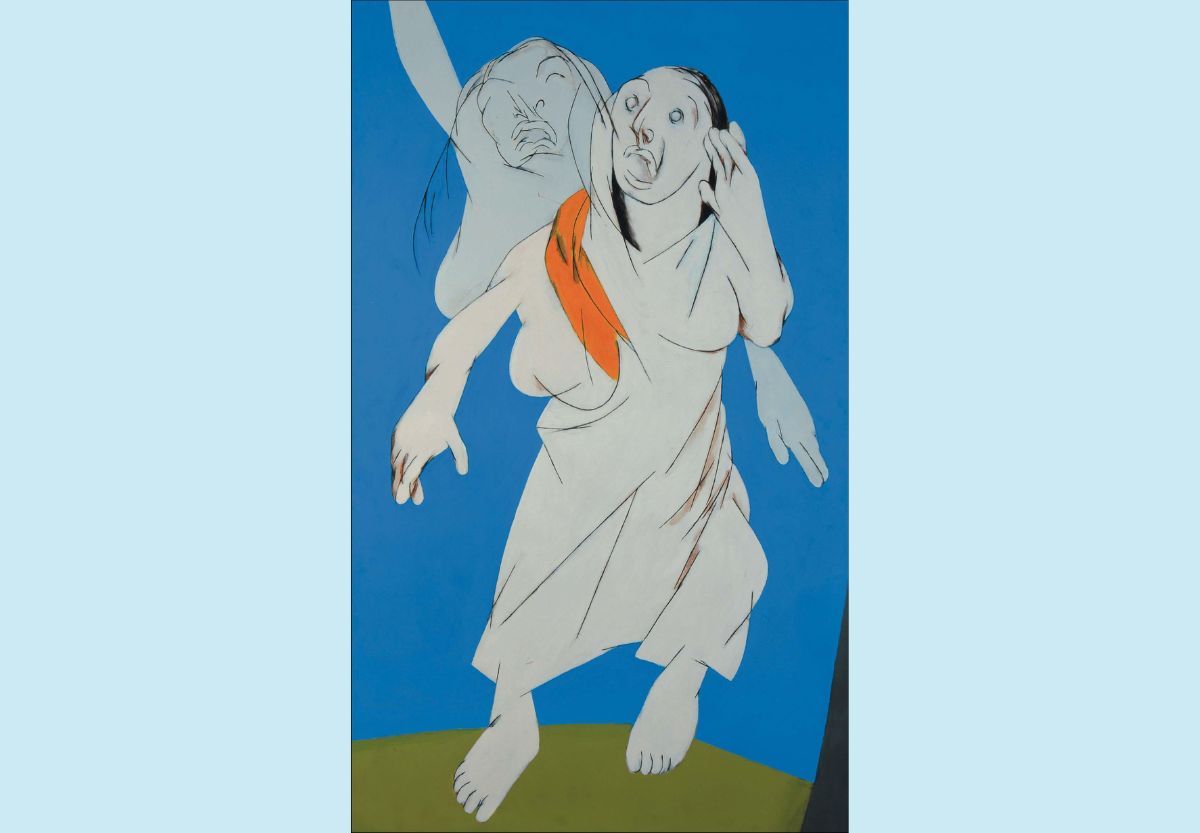
Prabodh interrogates his work thus:
Someone’s come here wearing the mask of silence
and has balanced himself on my fingertip,
flowed in from a district across the border,
snapped awake, after crossing the boundary of dawn.
Here someone’s descended the stairs of the step-well.
Here someone’s crossed the desert province and come running,
uprooted by the blast of desolation.
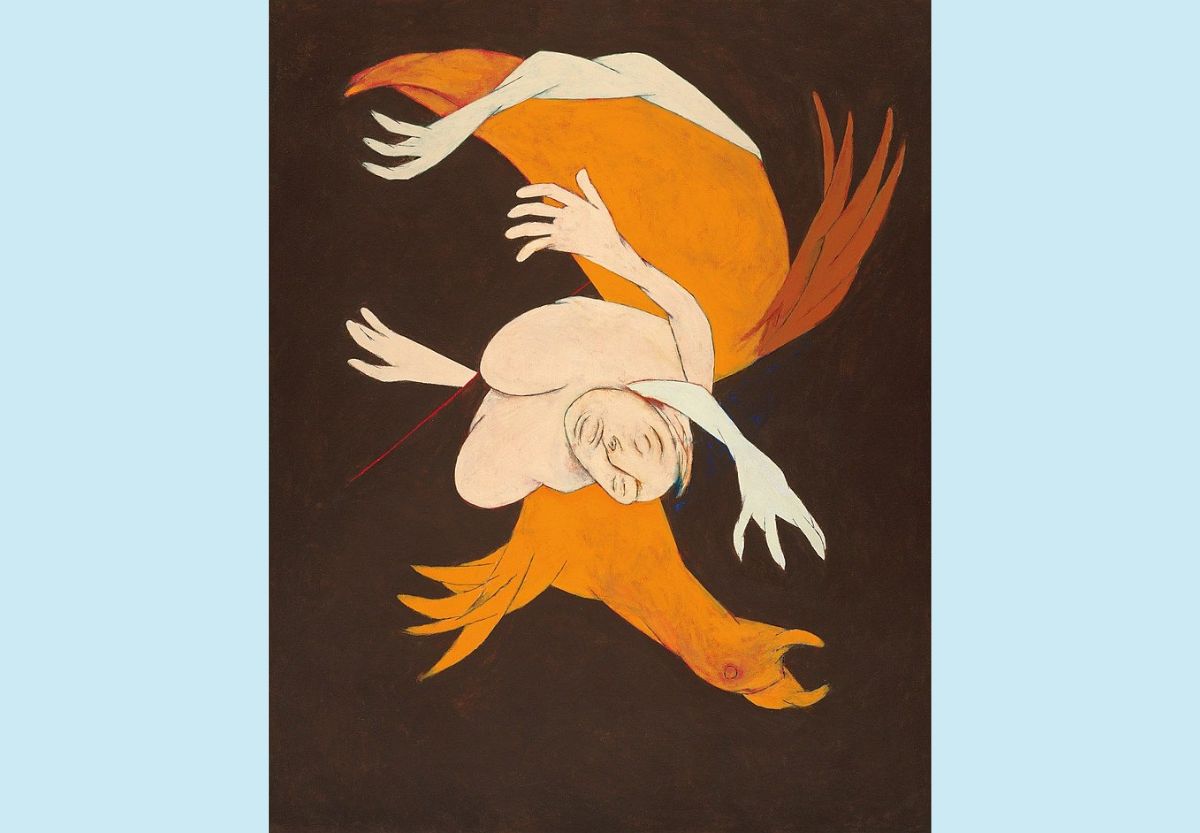
Parikh communicates the feeling of solitude that Mehta’s paintings make one feel, while also acknowledging the sense of movement and dynamism they convey: “Morning and evening, the hours here are festive. / Someone comes here without a sound.”
*****
Here’s a list of poems mentioned in this article:
- Iliad by Homer
- Ode on a Grecian Urn by John Keats
- On the Medusa of Leonardo Da Vinci in the Florentine Gallery by Percy Bysshe Shelley
- Cezanne’s Ports by Allen Ginsberg
- Landscape with the Fall of Icarus by William Carlos Williams
- This Is Just To Say by William Carlos Williams
- Musée des Beaux Arts by W. H. Auden
- The Starry Night by Anne Sexton
- Edward Hopper’s Office at Night by Victoria Chang
- Edward Hopper Study: Hotel Room by Victoria Chang
- Upon Viewing Tyeb Mehta’s Paintings by Prabodh Parikh
*****
Mekhala Singhal is Assistant Editor at Advisory.
 souk picks