
Brave new world: Modernism in India
Editor’s Note: The liberalisation of India’s economy in 1991 helped transform our art production and market. Contemporary art found a home. An increasingly westernised audience embraced these newer styles and methods. In the years since, the Indian art industry has had a greater engagement with the west, and popular international festivals held in India continue to effect greater global exposure and visibility for homegrown art.
This article originally appeared on the MAP Academy website. All images that appear with the MAP Academy articles are sourced from various collections around the world, and due image credits can be found on the original article on the MAP Academy website. The MAP Academy is a non-profit online educational platform committed to building equitable resources for the study of art histories from South Asia.
*****
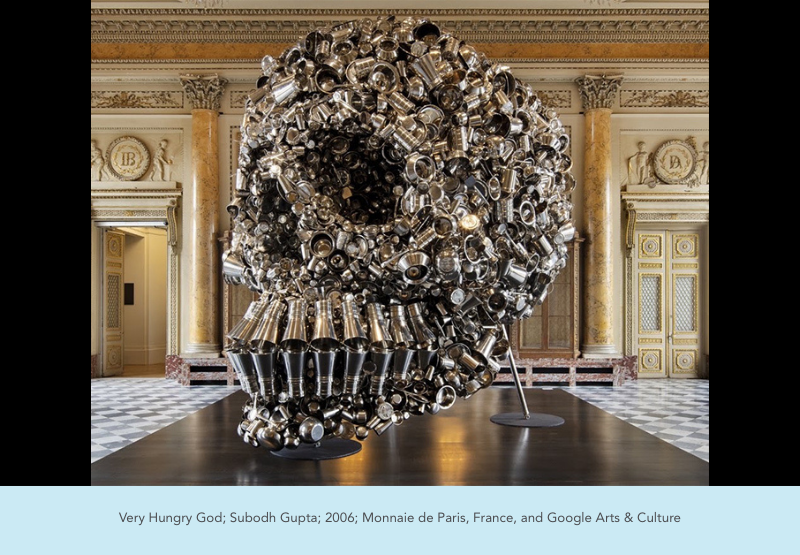
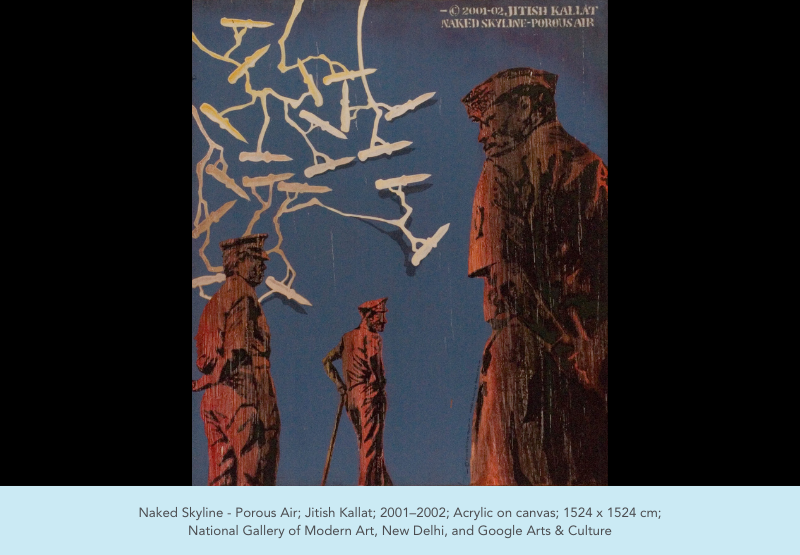
Beginning with the liberalisation of India’s economy in the 1990s, there was a surge in economic and cultural engagement between India and the world. Globalisation had lasting effects on art production and the art market in India. This took place through the partial westernisation of contemporary Indian art practices, a new focus on local themes as distinct from the global and an increase in the prices and sales of Indian art, particularly modernist work, during a boom period in the 2000s. Contemporary Indian art made in the wake of the boom years by artists such as Subodh Gupta, Shilpa Gupta and Jitish Kallat often commented on the process of globalisation and the series of changes in India’s consumption patterns and visual culture. Some critics have argued that while the increased sales and global recognition have benefited artists individually since the late 1990s, trend-driven eclecticism and pressure to stay relevant in the art world has hurt the overall quality of work produced in India.
 While Indian Modernism was directly influenced by colonial rule, scholars of the post-liberalisation period suggest that the present-day art scene in India is the result of lop-sided globalisation due to Western tastes and selective foreign investment via auction houses, such as Sotheby’s and Christie’s. For most of the twentieth century, Indian art received little attention on the global stage until the economic liberalisation in the 1990s. Following this event however, foreign investors were able and willing to speculate on the newly opened Indian market with confidence after seeing the rapid commercialisation of Chinese art around the same time. This influx of foreign currency — cautious at first, then gaining speed by 2000 — encouraged curators, collectors and art institutions to take note of it and prepare art historical timelines for viewing and discussing Indian art. This focus on India’s modernist phase is seen by many of those working in the field as having delayed and reduced the support for experimentation in contemporary art.
 During the boom period, the Indian diaspora was the largest consumer of Indian art, as they wanted to remain connected with India’s changing cultural landscape. Apart from modernist art, contemporary art sold extensively as well, with prices for the more popular artists remaining high even after the deflation of the boom in 2009, but plummeting for others. Aside from sales at galleries and auction houses, funding for individual art projects also increased through grants and monetary aid offered by foreign cultural organisations. The global presence of South Asian art has also encouraged domestic corporate entities to invest in art, although the increase in private spending has reduced government funding for the arts substantially.
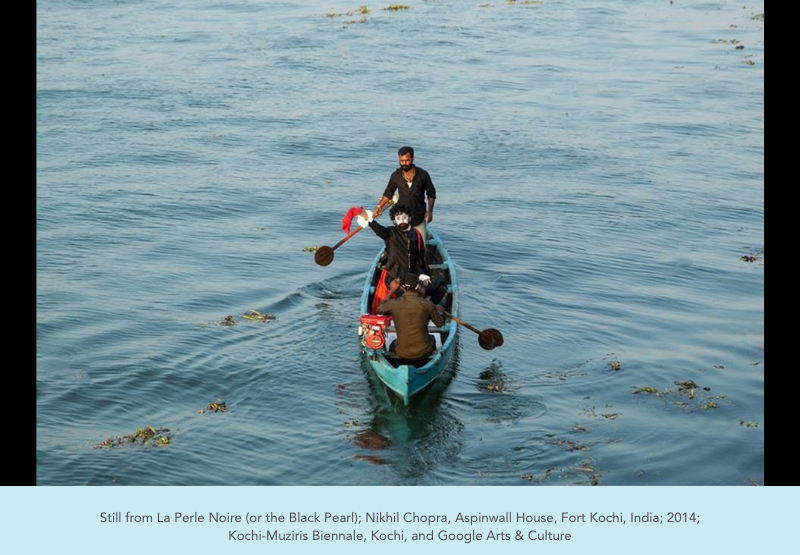
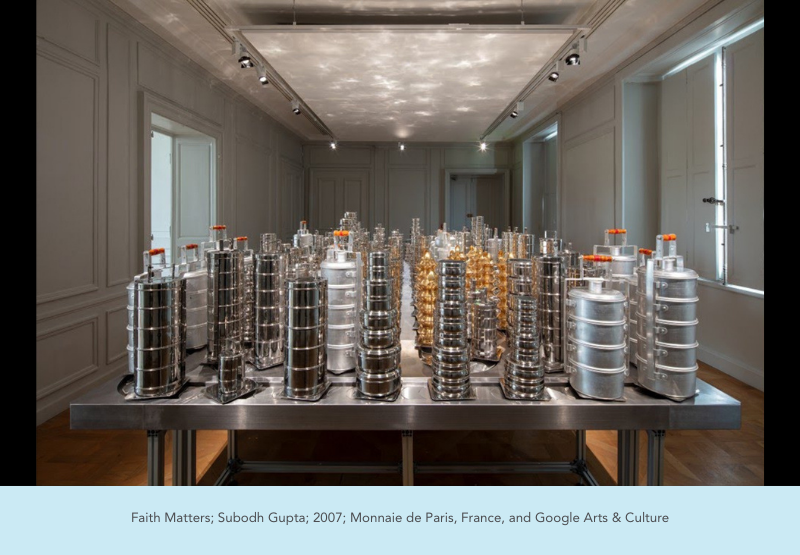 While the Indian art market continues to see a higher saleability among paintings and sculpture, especially Modernist pieces, than of conceptual, digital or installation art, the difference has reduced significantly in recent years, especially with more collectors and investors trading in the notional value of art objects, such as authenticity certificates and Non-Fungible Tokens (NFTs). Installation and performance artists continue to be funded largely through grants from organisations that specifically support the broad needs of contemporary art, such as the India Foundation for the Arts, the Foundation for Indian Contemporary Art (FICA), Goethe Institut/Max Meuller Bhavan and the Inlaks Shivdasani Foundation, or receive cultural visibility from residencies such as HH Art Spaces, Khoj International Artists’ Association, St+art India Foundation and 1Shanthiroad. Alternatively, artists and collectives who work mainly in non-traditional media, including Sonia Khurana, Nikhil Chopra, Raqs Media Collective, CAMP and Desire Machine Collective have moved to the global stage where they have received significant cultural and financial support from Western institutions.
 Significant international exhibitions and events that have taken place in the past three decades have shaped artist careers as well as public perception of Indian art. In the 1990s, Indian art gained recognition particularly within ascendant Asian markets through organisations and events like the Japan Foundation, the Fukuoka Asian Art Museum, the Singapore Biennale and the Shanghai Biennale. Major exhibitions in the West followed soon after in the 2000s, notably Edge of Desire: Recent Art in India (2005), which was shown at multiple venues in Australia, Mexico, USA and India; The Empire Strikes Back (2007) at Saatchi Gallery in London; Indian Highway (2008–2009) at Serpentine Gallery, London; Convergence: Contemporary Art from India and the Diaspora (2013) at the William Benton Museum of Art, USA; and Midnight to the Boom: Painting in India after Independence (2013) at the Peabody Essex Museum of Art, USA.
The 2000s have seen recurrent international art events being held in India, such as the Kochi-Muziris Biennale, the India Art Fair, Serendipity Art Festival, Delhi Photo Festival and the Chennai Photo Biennale, all of which have contributed to making the Indian art scene more global.
*****
The MAP of Knowledge
Sign up for the MAP Academy's free online course, Modern & Contemporary Indian Art, authored by Dr Beth Citron and developed in partnership with Terrain.art. Through engaging videos, illustrated texts and interactive quizzes, the course introduces a range of artists such as Amrita Sher-Gil, Zarina Hashmi and Sudhir Patwardhan, and explores a trajectory of key figures, artworks and pivotal moments in modern history. Spanning the late-19th century to the present day, it also examines artistic responses to several shifting socio-political forces of the time.
This article has been written by the research and editorial team at the MAP Academy. Through its free knowledge resources—Encyclopedia of Art, Online Courses, and Stories—the MAP Academy encourages knowledge building and engagement with the region's visual arts. Follow them on Instagram to learn more about art histories from South Asia.
 souk picks