

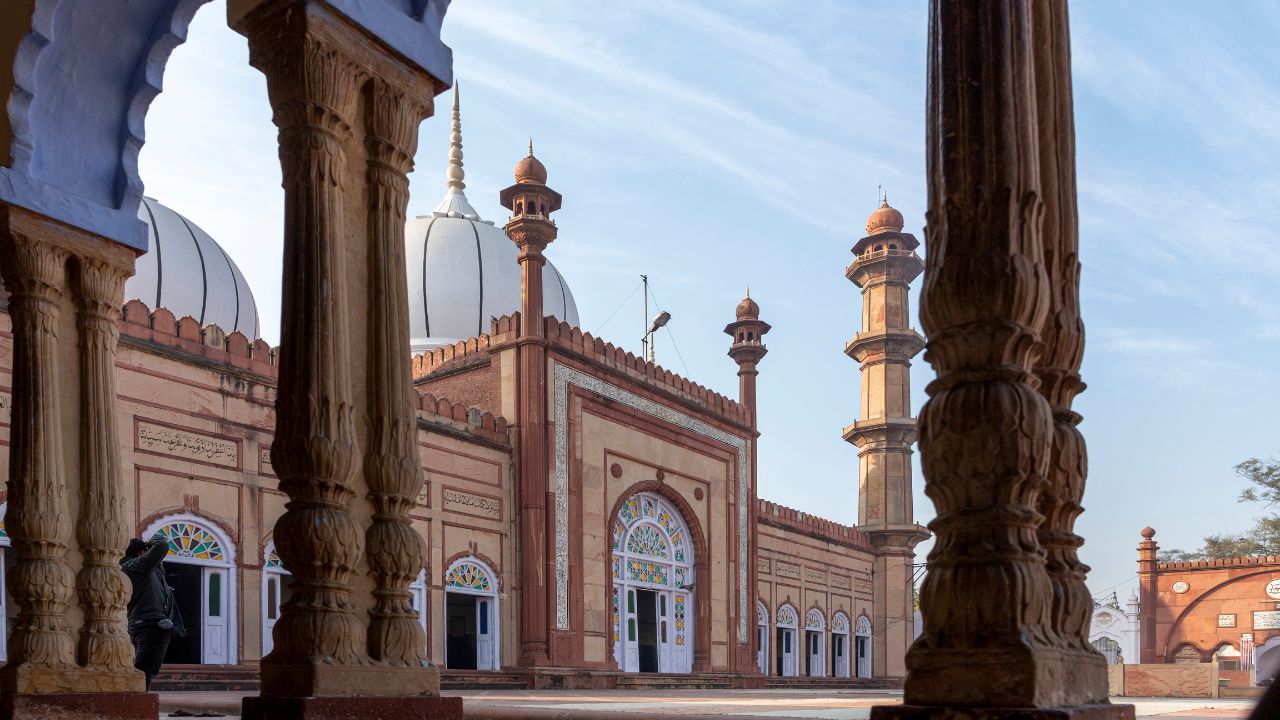
Cities in time: The story of Aligarh
Editor’s note: Aligarh, formerly known as Koil, comes to life in Aligarh: The City That Outlasted Empires by Atif Syed. Drawing on extensive historical research and rare archival material, the book presents a vivid portrait of how the city came to be: from the many rulers who staked claim on it to the stories of the everyday men and women who, till today, define its essence.
In the following excerpt, the author takes us through the origin story of “Koil” (or Kol), and the many possible stories and legends that gave Aligarh its original name. This excerpt has been published with permission from Hachette India.
*****
Origin of the Name Koil or Kol
The name Koil or Kol has several origin stories, though none can be definitively proven, and their historical accuracy remains unverified.
Legend of Balaram
In this story, Balaram is depicted as a legendary figure who played a key role in the founding of the town of Kol. According to local traditions, Balaram, a revered figure from Hindu mythology and the elder brother of Lord Krishna, is said to have slain a great demon named Kol at this site. After defeating Kol, he subdued the region with the help of the Ahirs, a pastoral community, establishing control over this part of the Doab.
The town’s name could therefore be attributed to Balaram’s victory over Kol. He is also credited with founding other towns in the area, such as Ramghat on the Ganges, while the Ahirs, who followed Balaram and were part of Rama’s army, established other settlements like Hardava (modern-day Harduaganj). This legend shares connections with the founding story of Achleshwar Mahadev temple in Aligarh, as both narratives center on Balaram vanquishing a similarly-named demon (Kol and Kolha Sur) and consecrating sacred spaces in the region.
The Pesky Fox and a jhīl (a small lake, also called kol in old Hindi)
Another legend attributes the founding of Kol to the Dor Rajputs, a clan prominent in the Bulandshahr district. According to the story, in 429 Sambat (372 ce), Raja Vikrama Sen of the Dor tribe ruled in Baran (modern-day Bulandshahr), while his brother Kali governed Jalali, both as tributaries of Raja Anang Pal of Delhi. Vikrama Sen had two sons, Indur and Mokindur; Indur succeeded his father in Baran, and Mokindur took over from his uncle in Jalali. Mokindur was succeeded by Gobind Sen, then by Nahar Singh, the founder of Sambhal. Nahar Singh’s grandson, Dasrath Singh, founded Jalesar. He had no heirs, and after his death, his brother Bijai Ram assumed power, followed by Budh Sen.
One day, while riding from Jalali to Delhi, Budh Sen stopped to dismount by a jhīl. While he waited for his followers, a fox approached and barked at him, provoking Budh Sen to strike it with his sword. The fox retreated to a hole but continued to bark and challenge the Raja until his retinue arrived. His advisors, struck by the courage of such a small creature, suggested that the soil itself must have a rare quality that could grant strength and vigour even to a humble fox. They proposed that this was an auspicious place to establish a city and fort.
Raja Budh Sen, consulting his astrologer, confirmed that the moment was propitious. Taking a handful of clay from the jhīl with his dagger, he laid the foundation for a new city, naming it Kol (after the jhīl). Within a few years, the fortress and city were completed, and the seat of government moved from Jalali to Kol, which became the capital of a vast kingdom, including Pataili, Jalesar, Badaun, Sambhal, Kampil, and Baran.
Tribe of Weavers
The Kolis are a tribe traditionally known for their weaving skills. It is possible that the name “Kol” originated from a settlement of the Koli tribe; indeed, the 1872 Census recorded approximately 35,000 Kolis in the district. The longstanding history of cotton cultivation in the area supports the idea that Kol might have been named after this community of weavers.
Indigo sold in Koil was called “Cole”
During Emperor Jahangir’s reign, English traveller William Finch observed that the town of Koil specialized in producing a variety of indigo called “Cole.” It is plausible that the name came from the locally-produced indigo.
*****
This excerpt from Aligarh: The City That Outlasted Empires by Atif Syed has been published with permission from Hachette India.
 souk picks