

‘Mozart of Madras’: The AR Rahman story
Editor’s note: In the early ’90s, a young composer burst on to the scene and Indian film music was altered forever. For over three decades, AR Rahman has been the maestro behind the soundtrack of not just our cinema, but India itself. On the eve of the release of Ramayan—which features both Rahman and legendary Hollywood composer Hans Zimmer—Narendra Kusnur looks back at Rahman’s dynamic and scintillating career, and the many different ways in which he’s left his mark on history.
And as always, we have a YouTube playlist with all the songs mentioned in this article.
Written by: Narendra Kusnur
*****
Once again, music fans await the latest offering of AR Rahman. Some 34 years after he hit the headlines with Roja, the ace Chennai composer continues to grab the headlines. His latest coup is a collaboration with legendary Hollywood composer Hans Zimmer on Nitesh Tiwari’s Ramayan, starring Ranbir Kapoor, Sai Pallavi and Yash. While Rahman is composing the songs, Zimmer is doing the background music. Let’s listen to the first release ‘Jai Jai Ram’, sung by Shreya Ghoshal and Arijit Singh, with words by Kumar Vishwas.
Though his critics feel Rahman’s quality and success rate have gone down over the past decade, the truth is that every year, he comes up with one or two scores that please the fans. Last year, he had Chhaava in Hindi and Thug Life in Tamil, and this year, he’s had the Telugu film Peddi and Main Vaapas Aaunga in Hindi. Let’s hear ‘Muththa Mazhai’, sung by Dhee in Thug Life, and ‘Tere Paas Main’, by Deepali Sahay in Main Vaapas Aaunga, for a taste of his recent work.
Rahman was born AS Dileep Kumar on January 6, 1967, and his father RK Shekhar was a composer in Malayalam films. The youngster was part of bands like Roots and Nemesis Avenue, but the break came when director Mani Ratnam approached him for Roja. By that time, he and his family had converted to Islam and he had changed his name to Allah Rakha Rahman. While the Tamil version was a huge success, the Hindi soundtrack actually gave him nationwide exposure. Let’s listen to the same tune in two languages—‘Chinna Chinna Aasai’ in Tamil and ‘Chhoti Si Asha’ in Hindi. Both are sung by Minmini.
Ever since, Rahman’s career has had numerous highlights, including hits in both South Indian films and Bollywood movies, a project with British composer Andrew Lloyd Webber, two Academy awards and two Grammy awards. In this column, it would be impossible to mention each hit song or film, so we choose only a handful of his creations. As such, many fans may feel their favourite numbers are missing, but that’s because of the sheer volume of his discography.
Let’s begin with his early phase. After Roja, Rahman did many south Indian films till 1994. His second film was Yodha in Malayalam, after which he had Tamil hits in Gentleman, Thiruda Thiruda and Kadhalan. The Hindi version of Kadhalan, titled Humse Hai Muqabla, was a super-success, with songs like ‘Muqaala Muqabla’, ‘Gopala Gopala’ and ‘Urvashi Urvashi’. Here, we play the Tamil version of ‘Muqaala’, sung by Rahman, Mano and Swarnalatha, and the Hindi version of ‘Urvashi’, by Rahman, Noel James and Shankar Mahadevan.
Already nostalgic? Let’s move to the 1995 film Bombay¸ whose soundtrack was released in Tamil, Hindi and Urdu. It was around this time that the media began talking of how Rahman had introduced a new sound in film music, totally different from what Ilaiyaraja, Nadeem-Shravan and Jatin-Lalit were producing. They also praised his innovative use of rhythm, with drummer Sivamani often accompanying him, and the way he used technology to create a different effect. They even called him ‘Mozart of Madras’. From Bombay, let’s play ‘Tu Hi Re’ by Hariharan and Kavita Krishmurthy, followed by the instrumental theme music.
Till now, Rahman’s Hindi work essentially comprised recreations of songs originally composed in Tamil. The opposite happened in Ram Gopal Verma’s Rangeela, originally composed in Hindi but dubbed in Telugu and Tamil. The legendary Asha Bhosle sang two songs in the Hindi version—‘Rangeela Re’ and ‘Tanha Tanha Yahaan’. Let’s listen to the former. This film was to give Rahman many offers to compose in Hindi.
Imagine, we’re still in 1995, and Rahman already had a sizable chunk of hits. He focused on Tamil films for a while, but 1997 saw the release of Sapnay, the Hindi version of the Tamil movie Minsara Kanavu, and the Hindi film Daud. Around this point, Rahman was seen to have become repetitive. He once told this writer that since a certain style had worked, filmmakers insisted he continue with that formula. Luckily, he got a project of a different kind, when the newly launched Sony Music India approached him for Vande Mataram, an album to mark 50 years of Indian Independence. ‘Maa Tujhe Salaam’, sung by Rahman himself and written by Mehboob, remains one of his most popular works even today and is played on national days. Let’s hear that, followed by ‘Gurus of Peace’, a collaboration with Pakistani maestro Nusrat Fateh Ali Khan.
The return to form in Bollywood happened with Dil Se, released as Uyire in Tamil. The song ‘Chhaiya Chhaiya’, sung by Sukhwinder Singh and written by Gulzar, became a rage. With this and Taal the following year, one noticed that he had started using more north Indian elements, an indication that he was broadening his repertoire. Let’s watch ‘Chaiyya Chaiyya’, filmed on Shah Rukh Khan and Malaika Arora, and the Taal title track, sung by Alka Yagnik and Udit Narayan, and featuring Aishwarya Rai and Akshaye Khanna.
The next few years produced many gems. Thakshak, Pukar and Fiza catered to the Hindi market, and Alai Payuthey and Kandukondein Kandukondein were successful in Tamil. One of the Fiza songs, ‘Piya Haji Ali’, marked a new style for Rahman, as it had a devotional flavour. While it was popular among followers of Islam, ‘O Paalanhaare’ from Lagaan became popular among bhajan lovers. Let’s listen to both.
Lagaan, with director Ashutosh Gowariker, was one of Rahman’s biggest hits. Three years after its 2001 release, the two worked together on Swades. Both films had lyrics by Javed Akhtar, and their songs feature on playlists even today. Let’s hear ‘Mitwa’ from Lagaan, sung by Udit Narayan, and ‘Yeh Jo Des Hai Tera’, sung by Rahman himself.
Rahman’s success ensured that he got international offers too. Andrew Lloyd Webber, who had produced such great musicals like Jesus Christ Superstar, Evita, Cats and The Phantom Of The Opera, hired the Chennai composer for his 2002 Bollywood-themed production Bombay Dreams, with lyrics by Don Black. It ran for two years on London’s West End, before premiering on New York’s Broadway. Around that time, Rahman also did a Mandarin movie Warriors Of Heaven And Earth, whose music was critically acclaimed. Here are ‘Shakalaka Baby’ from Bombay Dreams, performed by Preeya Kalidas and Raza Jaffrey, and ‘Warriors in Peace’ from Warriors, featuring Chinese singer Jolin Tsai.
Rahman’s biggest international project, of course, was Danny Boyle’s 2008 film Slumdog Millionaire, which was about a Mumbai slum-dweller who becomes rich overnight by winning a quiz show. Though critics felt it was far from the best music Rahman had done, it bagged two Academy Awards for Best Original Music Score and Best Original Song for ‘Jai Ho’, It also won two Grammy awards, a Golden Globe and a Bafta. Here’s ‘Jai Ho’.
After that, Rahman worked on a few other English films, like Boyle’s 127 Hours, Peter Blingsley’s Couples’ Retreat and footballer Pele’s biopic by the Zimbalist Brothers, besides Viceroy’s House and Blinded By The Light by UK-based Gurinder Chadha. But after 2010, most of his work has been for Bollywood and South Indian films. His Hindi movies have included Raavan, Rockstar, Jab Tak Hai Jaan, Raanjhana and Amar Singh Chamkila. Let’s play ‘Kun Faya Kun’, sung by Rahman, Javed Ali and Mohit Chauhan in 2011’s Rockstar, and ‘Vida Karo’, by Arijit Singh and Jonita Gandhi in 2024’s Amar Singh Chamkila.
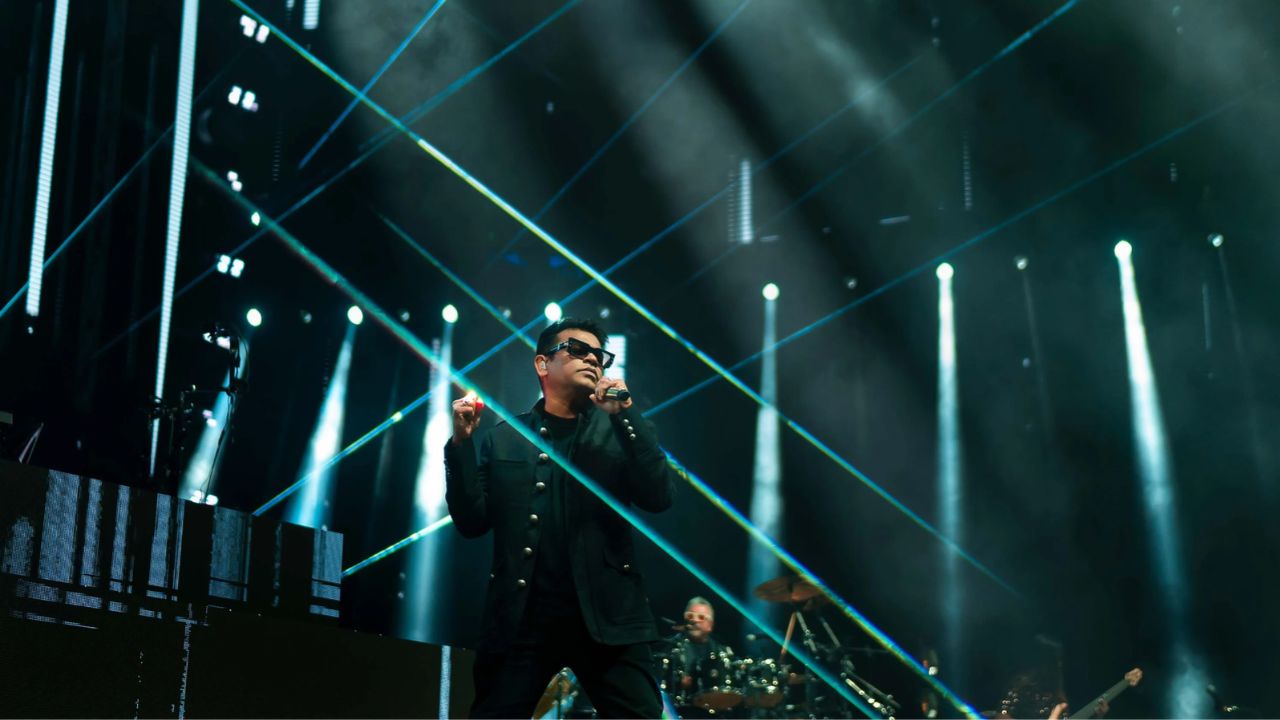
The column has so far talked of his film recordings. Needless to say, Rahman is known for his live shows. While many of them contain a good mix of his repertoire, he has also started the Sufiyana Safar series to focus on spiritual music. Here are two spiritual songs from a Sydney concert that took place in 2010, much before the series commenced. They are ‘Khwaja Mere Khwaja’ from Jodhaa Akbar and ‘Arziyan’ from Dilli 6.
Among Rahman’s collaborations, one has to mention ‘Ahimsa’, a song he recorded with Irish band U2. After releasing the studio recording, they played it together at their Mumbai show in December 2019, and Rahman was joined on stage by his daughters Khatija and Raheema. The performance got mixed reviews, with U2 fans feeling it didn’t fit in with the rest of the band’s set, but let’s watch it anyway.
Rahman has had his great phases over the years, and there have been times when he has not produced something of note. But he’s still prolific, and each new release is looked forward to. As we always do, here’s a playlist of songs mentioned.
Jai Jai Ram – Ramayan: Rise Of A Legend
Muththa Mazhai – Thug Life
Tere Paas Mein – Main Vaapas Aaoonga
Chinna Chinna Aasai – Roja
Chotti Si Asha – Roja
Muqaala Muqabla – Kadhalan
Urvashi Urvashi – Humse Hai Muqabla
Tu Hi Re – Bombay
Bombay Theme – Bombay
Rangeela Re – Rangeela
Vande Mataram – Maa Tujhe Salaam
Gurus of Peace (with Nusrat Fateh Ali Khan) – Vande Mataram
Chaiyya Chaiyya – Dil Se
Taal Se Taal Mila – Taal
Piya Haji Ali – Fiza
O Paalanhare – Lagaan
Mitwa – Lagaan
Yeh Jo Des Hai Tera – Swades
Shakalaka Baby – Bombay Dreams
Warriors In Peace – Warriors of Heaven and Earth
Jai Ho – Slumdog Millionaire
Kun Faya Kun – Rockstar
Vida Karo – Amar Singh Chamkila
Khwaja Mere Khwaja/Arziyan Live – Jodhaa Akbar/ Dilli 6, Live in Sydney
Ahimsa (with U2) – Live in Mumbai
*****
Narendra Kusnur has been a music journalist for over 40 years—including a decade-long stint covering the beat at the Mid-Day newspaper. He currently writes for The Hindu, Free Press Journal, Hindustan Times, and Rolling Stone India—besides the in-house magazines of prestigious institutions—such as NCPA and Shanmukhananda Hall.
 souk picks