


Rise of the mighty (wordle) gamer!
Editor’s note: Gamer culture has long been associated with flashy action adventure games such as Fortnite or GTA—male dominated and (let’s be honest) kinda misogynistic. Happily, we now have a niche subculture that is more cerebral, sociable, and easygoing, built around games like Among Us and Wordle. In this essay, Mekhala Singhal tracks how the universe of word, puzzle, trivia, and logic games has become the foundation of a global community of gamers and online content creators. Games night with friends has a whole new meaning today. (Psst, scroll down to check out an exhaustive list of games we’ve compiled that you can play with friends.)
Written by: Mekhala Singhal
*****
I confess! I am a gamer—much to my own disbelief! Yet I have never participated in the video game subculture driven by action and drama—be it violent first-person shooters like Call of Duty or PUBG, strategy games like Counter Strike, expansive open worlds such as the notorious GTA series, battle royale games like Fortnite, or even the ever popular Super Mario Bros. The gaming industry today is estimated to be worth 239.9 billion dollars (oof!)—a far cry from the Atari arcade (and then console) days of the ’70s. But until recently, online gaming didn’t include people like me—who preferred more solitary pursuits such as crosswords or Sudoku. The only nerdy gamer communities were into fantasy—‘role-playing games’ or RPGs, like Dungeons and Dragons.
Over the past decade or so, however, a subculture called ‘social gaming’ has been steadily growing. Games such as Wordle, or Words with Friends—dubbed ”Scrabble‘s modern heir and likely successor” by Vice—have built a brand new world for people like me, for the word nerds, puzzle lovers, and logic geeks.
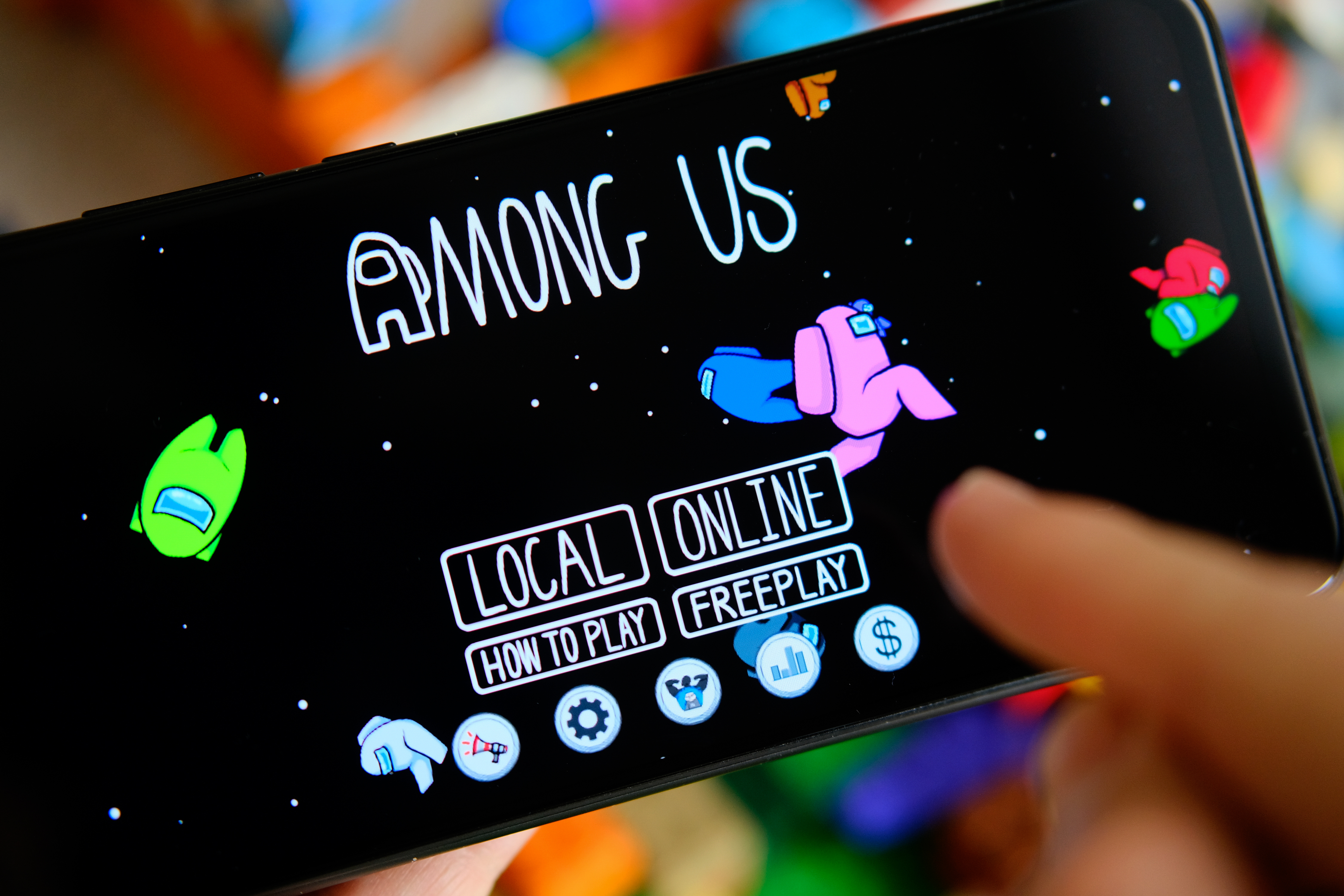
We’ve always had IRL parties built around classic games like Scrabble, Charades, or cards. But now millions (Words with Friends has over 10 million downloads) play similar games with friends and strangers around the world. Among Us, for example, with over 500 million active players at its peak in 2020, still continues to be played widely.
Today, the New York Times—which has already built a wildly successful solitary games section—is nagging its users to “play with friends”. Content creators make videos of themselves solving crosswords or GeoGuessr, where players have to figure out locations based on Google Street View images. As this survey by Deloitte points out, 70% of Gen Z teen gamers and 58% of Gen Z adult gamers in the US say playing video games helps them stay connected to others.
In 2020, my generation of twenty-somethings found itself stranded by a global pandemic. Many like me moved back in with parents after years of living by themselves and building a community of their own. It was strange and lonely. I went for weeks without speaking to or seeing anybody outside of my immediate family or the vegetable vendor round the corner. My social life consisted of WhatsApp video or Zoom calls. And then came Among Us, an online multiplayer game where you have to complete all assigned tasks and eliminate the secret Imposters lurking “among us”, as in, your team. After a few online streamers and gamers started playing it (the most popular on Twitch include Hafu, 5up, Wolfabelle), its popularity began to soar. Here is Hafu playing online:
People downloaded Discord, a common streaming and social messaging app much like Twitch, en masse. All my friends were suddenly obsessed with the weird alien-looking characters with leaves on their heads. In fact in 2020, Among Us was the most downloaded video game in the world.
It started out simple—we’d get on a call and play Among Us, and then the word game Contact, or online pictionary if it was a large enough group. Then came games like Fishbowl and Gartic Phone. Writing in Wired, MJ Lewis notes that Among Us offered a reprieve from narrative-based games centered around violence, or danger in when many were overwhelmed by an impending doom and the threat of illness. Social gaming is all about playing with no imminent threat. Although the craze died down once the borders reopened, the catalyst effect of Among Us remained.
While Among Us was the catalyst, social gaming went fully mainstream in 2021. The reason: a simple word game called Wordle—developed by Josh Wardle, a software engineer, for his wife during the Covid lockdown. The game spread like wildfire as a social media flex as people began posting their results. Others complained about difficult words and shared strategies on social media, By January 2022, Wordle had been acquired by The New York Times for a low seven-figure sum.
It’s not that such games weren’t already accessible, but a post-Wordle world provided the critical layer of virality—and monetisation, similar in a way to Twitch streamers—such as Ishaan, who became famous for playing the daily geography game ‘travle’ where you have to find the shortest path between two countries. Also: Hannah who solves the daily cryptic crossword game ‘minutecryptic’. Perhaps the most famous of them is rainbolt, who is deviously good at GeoGuessr.
While not even close to the number of subscribers attracted by an A-list Fortnite streamer, Ishaan consistently hits over a million views, and rainbolt has over 2 million followers on Instagram. Websites now drop a new game every day—which supports this growing ecosystem–helping creators make new content for their followers every single day.
While these games usually are solitary pursuits—your own private little ritual—there is a certain thrill in solving them together. As these games move from solitary to social, they are no longer associated with loners or isolated nerds—“rescuing online gaming from its association with children and socially isolated adults.”.

Game nights are one of my favourite ways to spend time with my friends. And while I wouldn’t go so far as to argue that online sessions can replace the buzz and excitement that an in-person games night brings to your life, it does come pretty damn close. And above all, it’s a great way to stay in touch with people who live far away. If nothing else, these games provide us with a way to step away from the otherwise constant barrage of social media slop we are subjected to on a daily basis. They offer us a moment of relief, or peace, or joy, or even just critical thinking, all of which is so very important today.
If word games aren’t your jam, then logic games (like CluesBySam, or Murdle), math games (like Nerdle), or general trivia games (like catfishing) are great alternatives. There are also ways to play your favourite board games online as well. Catan, the game that is likely to make you fight with all your friends in the same night, has an online version. Codenames, which is a personal favourite, also has an online alternative. So does Taboo. Here are all the games mentioned in this essay.
*****
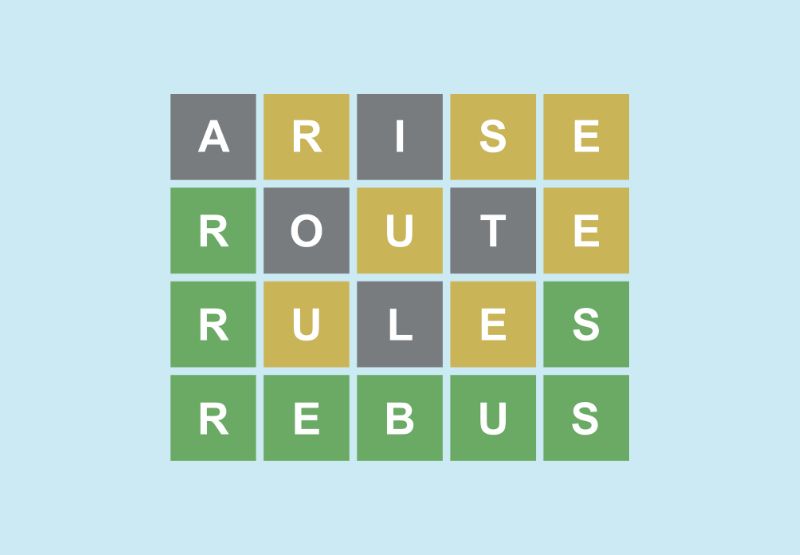
Wordle: Players have six attempts to guess a five-letter word, with each guess providing players with information through coloured tiles that indicate correct letters and their placement. A single puzzle is released daily.
Words With Friends: Players take turns building words with letters given to them; similar to the board game Scrabble.
GeoGuessr: A geography game in which players try to deduce locations from Google Street View imagery. The player can move around and navigate to help get clues and information about the area.
Among Us: A space-themed multi-player social deduction game, where players are cartoon astronauts. Among the players, there are a select few ‘Impostors’. The rest of the crew must find out who the Impostor is before the Impostor manages to kill them all.
Fishbowl: A multi-player game with a round for Charades, a round for Taboo, and a round called ‘Password’, where you must test your team’s memory—all based on words the members of the group must ‘add to the fishbowl’ at the start of the game.
Gartic Phone: A cross between the drawing game Pictionary and Taboo and a test of your ability to describe images; this is also a multi-player game that requires you to be on a call with people.
Contact: Also a group game, this is fun to play both online and offline—one person thinks of a word, and letter by letter, the rest of the group must work in tandem to uncover the word.
Skribbl: The classic Pictionary but online.
Codenames: You need two teams for this: each team with at least one spymaster, who knows which words on the board belong to which team. The spymaster(s) must give clues based on their team’s words, and the team must guess it right, or risk losing a point, skipping a turn, or, worst of all, losing the entire game.
Catan: Another multiplayer game, predicated upon colonising land is actually more fun than it sounds—build settlements, roads, and homes while trading supplies and resources in order to gain points in this game that can get quite heated if you play it right.
Travle: While this can be played solo, it might need you to have as much brain power as you can to get it right. A geography based game, you have to figure out the shortest path between two countries.
Globle: Similarly, in this geography game, you must figure out the country based on its distance to other countries.
Minute cryptic: If you’ve never really gotten into cryptic crosswords before, this is a great opportunity—with a single new clue every single day, and tutorials/explainer videos for each daily clue on their Instagram, it’s fun, nerdy and sometimes deeply (in a good way) frustrating.
Clues by Sam: This is a logic game, which will test your patience and resolve. It doesn’t validate “guesses” and you must use logic and deductive reasoning to go from one step to the next in order to label characters on the cards as innocent or criminal.
Murdle: Also a logic game, this one is like Cluedo but online—you are given clues and hints and by process of reasoning and elimination, you have to find out who the murderer of the day is, along with the location and the weapon of choice.
Nerdle: This is a simple math game, where you enter an equation (and it has to be correct) and you are informed, Wordle-style, with each guess, which number or function is correct.
Catfishing: If you are a trivia buff, this might be your jam. Using Wikipedia as its source material, this game gives you a list of categories under which a certain thing, person, event, etc might fall, and you have to guess it.
Taboo: The classic guessing game, but you don’t need cards anymore for it!
Raddle: Another word game, this one is a bunch of different little puzzles in one, encouraging you to get from one word to another.
Mini crossword alternative (Crossherd): The traditional mini crossword puzzle, but this one allows you access to its archives, along with stats. If you’re looking for a more India-centric one, you can go here!
Azee (Azul alternative): Azul is an abstract strategy game that might be difficult to understand at first but is super fun when you get into the thick of it—players must figure out a way to pick and place tiles in order to gain points (or sabotage each other).
*****
Mekhala Singhal is Assistant Editor at Advisory.
 souk picks