

The ’90s: Bollywood’s ‘return to melody’
Editor’s note: In this wonderful essay tinged with the faint glow of nostalgia, music journalist Narendra Kusnur takes us through Hindi film music of the ’90s. How Bollywood music won over fans, edging out competition from the growing Indipop movement, with a return to melody and shaadi songs, even as a new crop of incredibly gifted composers and singers, including the great AR Rahman, took centrestage.
And as always, we have a playlist with all the songs mentioned in this article.
Written by: Narendra Kusnur
*****
The year was 1995, and Indipop was the new fad. Songs like Alisha Chinai’s ‘Made In India’ and Daler Mehndi’s ‘Bolo Ta Ra Ra’ were played at weddings and home stereos. Some even predicted this genre would create a dent on Hindi film music, which occupied an estimated 75% of cassette sales.
Alas, that was not to be. Yes, the audience for Indipop kept increasing, especially in the big cities, but the janta still wanted its Bollywood masala. They preferred film stars to music video models. Let’s revisit two film songs that were huge in 1995.
These two songs represent two personalities who made a mark in the 1990s and not only ruled the decade but have millions of fans even today. They were two game-changers. The first was actor Shah Rukh Khan, whose Dilwale Dulhania Le Jayenge had one of the three big soundtracks of 1995, with music by Jatin-Lalit. The second was music director AR Rahman, whose music for Bombay (composed first in Tamil) and Rangeela (seen in the video above) were huge success stories. Three years later, in 1998, these two stars continued to be the biggest names in their fields. Let’s watch a video from Mani Ratnam’s Dil Se, featuring Shah Rukh Khan and Malaika Arora, with music by Rahman. The song, penned by Gulzar, is instantly recognisable.
Hindi film music ruled the 1990s, despite the huge popularity of Indipop between 1995 and 1999. If music channels like MTV and Channel V showed more pop videos in the middle of the decade, they eventually returned to a huge dose of film song promos. Even today, film songs from that period bring nostalgia. Let’s look back at that magical decade, beginning with a song from 1990.
Composed by Nadeem-Shravan and written by Sameer, the Aashiqui soundtrack sold 20 million units. Most songs were sung by Kumar Sanu and Anuradha Paudwal, and the media wrote of a ‘return to melody’ in Hindi films. They had their reasons. The late 1980s had some big hits like Qayamat Se Qayamat Tak, Tezaab and Maine Pyar Kiya, but overall the quality of music was erratic. Aashiqui, starring Rahul Roy and Anu Agrawal, gave the industry the much-needed boost, and Nadeem-Shravan suddenly shot to fame after struggling for a decade. In 1991, the duo’s music for Dil Hai Ke Maanta Nahin and Saajan cemented their success. Let’s hear one song from each film.
Besides Nadeem-Shravan, music directors to make a mark from 1990 to 1993 were Anand-Milind (Dil, Beta, Bol Radha Bol), Jatin-Lalit (Jo Jeeta Wo Sikandar), Shiv-Hari (Darr) and Anu Malik (Baazigar). In 1992, Rahman’s Tamil music in Roja was recreated in Hindi, giving him his first nationwide hit. Among the singers, Kumar Sanu, Udit Narayan, Alka Yagnik, and Anuradha Paudwal were the most prolific, doing both solo numbers and duets. Let’s listen to the Sanu-Alka song ‘Ghunghat Ki Aadh Se’ from Hum Hai Raahi Pyaar Ke, and the Udit-Anuradha duet ‘Mujhe Neend Na Aaye’ from Dil. Both songs feature Aamir Khan.
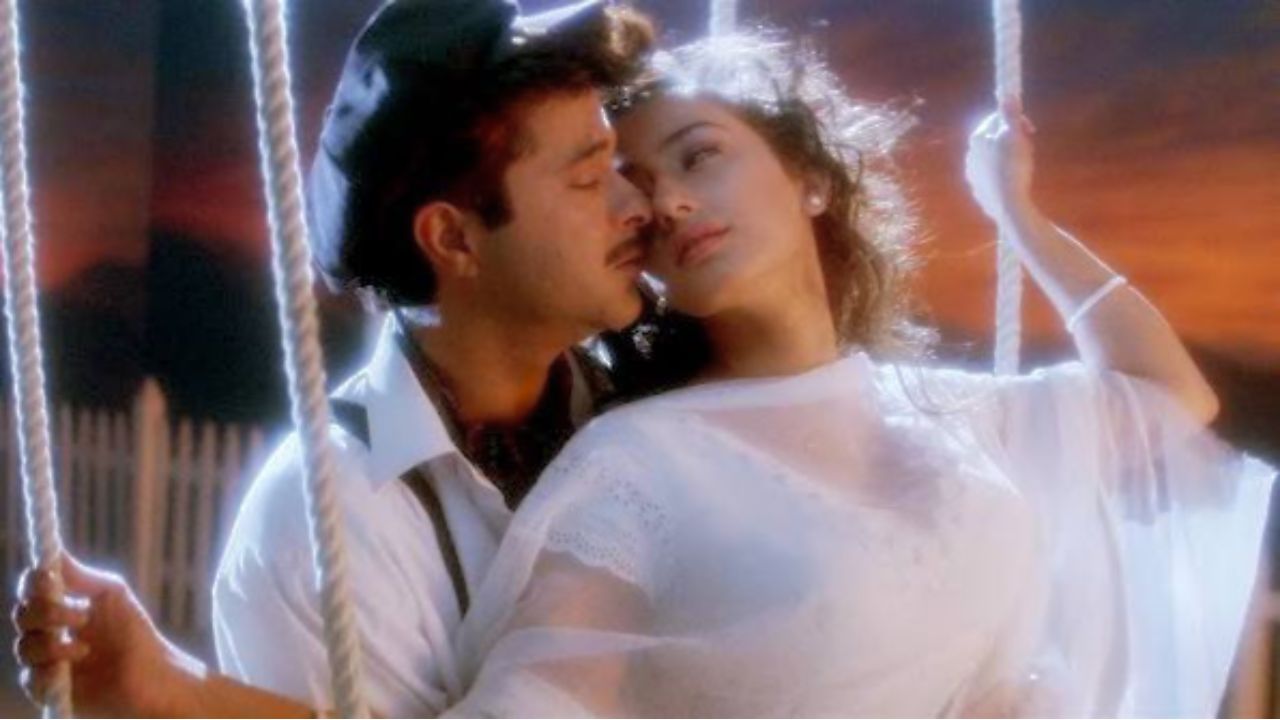
The year 1994 was special for two reasons. The year began with the death of legendary music director RD Burman on January 4. The music director had been prolific from the late 1960s to the late 1970s, and continued to provide hits in the 1980s. But with the arrival of new names, he had slowed down in the early 1990s. However, when the soundtrack for Vidhu Vinod Chopra’s 1942: A Love Story was released a few months after he passed away, it became a huge success. With television channels playing his older songs, an RD revival took place. Let’s listen to ‘Ek Ladki Ko Dekha’, written by Javed Akhtar, sung by Kumar Sanu, and picturised on Anil Kapoor and Manisha Koirala in 1942: A Love Story.
The other major development in 1994 was the success of Sooraj Barjatya’s Hum Aapke Hain Koun… ! With Salman Khan and Madhuri Dixit in the lead, the film set the trend for wedding music. It had 14 songs, with lyrics shared by Dev Kohli and Ravinder Rawal. Both of them were not star names, but proved that if audiences identified with a song’s subject, chances of success were higher. Wedding songs became popular, and irrespective of age, ladies started copying Madhuri’s costumes and dance steps. Here are two songs, sung by Lata Mangeshkar and S.P. Balasubramanyam, that typefied shaadi ka naach-gaana.
The first half of the 1990s was dominated by melody, but there were other kinds of songs that became one-off hits, sometimes because of some controversy. ‘Choli Ke Peeche Kya Hai’, composed by Laxmikant-Pyarelal in Khalnayak, came under criticism for its double entendres, and ‘Tu Cheez Badi Hai Mast Mast’, by Viju Shah in Mohra, was flayed for describing a woman as cheez (thing). Let’s watch these two videos.
The sudden boom in Indipop after 1995 definitely diverted attention from film music. Yet, it wasn’t able to replace the genre, or even come close. The second half of the decade saw the rise of Rahman and Jatin-Lalit, the return of Anu Malik, and the gradual fading away of Nadeem-Shravan, thanks mainly to developments after the tragic killing of industry magnate Gulshan Kumar in 1998. Rahman, specifically, was known for bringing a new sound to Bollywood and even experimenting with technology and rhythms, and though he had his repetitive phase, came up with successful soundtracks in Dil Se, Taal and Thakshak. Let’s watch the Taal title song, sung by Alka Yagnik and filmed on Aishwarya Rai, followed by ‘Rang De’, sung by Asha Bhosle and filmed on Tabu in Thakshak.
For their part, Jatin-Lalit followed up the Dilwale Dulhania success with Yes Boss, Kuch Kuch Hota Hai, Ghulam, and Sarfarosh. Anu Malik was first known more for plagiarising western numbers—having copied the international hits ‘Macarena’, ‘Last Christmas’, and the Godfather love theme. But he also had some original work, with Border producing the popular ‘Sandese Aate Hain’, sung by Sonu Nigam and Roopkumar Rathod. Let’s play this song after listening to the Kuch Kuch Hota Hai title track, sung by Alka Yagnik and Udit Narayan for Jatin-Lalit.
Besides the prolific music directors, there were also those known for a single hit soundtrack. In 1994, Tushar Bhatia composed music for the Aamir Khan-Salman Khan film Andaz Apna Apna. Three years later, arranger Uttam Singh tasted huge success with Dil To Pagal Hai, which became the third largest selling soundtrack of the 1990s after Dilwale Dulhania and Aashiqui. Let’s tune in to ‘Yeh Raat Aur Yeh Doori’, sung by S.P. Balasubramanyam and Asha Bhosle in Andaz Apna Apna, and the Dil To Pagal Hai title song by Lata Mangeshkar and Udit Narayan.
The decade would be incomplete without mentioning the remix trend. Sensing their popularity among young audiences visiting night clubs, many disc jockeys or DJs took older songs and added fresh hip-hop elements or Afro rhythms to give them a new spin. In 1994, Bally Sagoo successfully remixed ‘Chura Liya’, the 1970s hit from Yaadon Ki Baraat. Other albums like Roop Inka Mastana by Shaan and Sagarika, and Jalwa (Dance Hungama) by Jayanta Pathak and DJ Akbar Sami continued the trend. Even Asha Bhosle took the help of musician Leslie Lewis to create new versions of RD Burman songs on Rahul & I. The War of the DJs competition by Times Music provided a platform for DJs, who often resorted to remixing old songs. Opinion was divided. Some praised these efforts for reviving retro hits among newer audiences. However, the whole trend came in for criticism because of an excess of shoddy remixes and the tendency of not giving credit to original artists. Let’s check two remix hits—Bally Sagoo’s ‘Chura Liya’, and the audio of the ‘Do Lafzon Ki’ remix by Jayanta Pathak and DJ Akbar Sami. Both were originally by RD Burman.
That was quite a trip down melody lane. The beginning of the 2000s spawned the entry of newer music directors like Shankar-Ehsaan-Loy and Vishal-Shekhar, and an increased use of Punjabi and western influences in Bollywood songs. Right now, let’s relive the nostalgic 90s. As we always do, we end with a playlist of songs mentioned.
Dilwale Dulhania Le Jaayenge – Tujhe Dekha To
Rangeela – Ho Ja Rangeela Re
Dil Se – Chaiyya Chaiyya
Aashiqui – Main Duniya Bhula Doonga
Dil Hai Ke Maanta Nahin – Title song
Saajan – Tu Shaayar Hai
Hum Hai Raahi Pyaar Ke – Ghunghat Ki Aadh Se
Dil – Mujhe Neend Na Aaye
1942: A Love Story – Ek Ladki Jo Dekha
Hum Aapke Hain Koun.. ! – Didi Tera Devar Deewana
Hum Aapke Hain Koun.. ! – Joote Do Paise Lo
Khalnayak – Choli Ke Peeche Kya Hai
Mohra – Tu Cheez Badi Hai Mast Mast
Taal – Taal Se Taal Mila
Thakshak – Rang De
Kuch Kuch Hota Hai – Title song
Border - Sandese Aate Hain
Andaz Apna Apa – Yeh Raat Aur Yeh Doori
Dil To Pagal Hai – Title song
Yaadon Ki Baraat – Chura Liya (remix)
The Great Gambler – Do Lafzon Ki (remix)
*****
You can find all of the songs mentioned above in this playlist.
*****
Narendra Kusnur has been a music journalist for over 40 years—including a decade-long stint covering the beat at the Mid-Day newspaper. He currently writes for The Hindu, Free Press Journal, Hindustan Times, and Rolling Stone India—besides the in-house magazines of prestigious institutions—such as NCPA and Shanmukhananda Hall.
 souk picks